Austrian Vignette: Complete Driver's Guide
Everything you need to know about the Austrian motorway vignette — types, valid periods, purchase locations, correct placement, and what happens if you drive without one.
What Is the Austrian Vignette?
The Austrian motorway vignette (Autobahnvignette) is a mandatory toll sticker — or digital equivalent — required for all motor vehicles up to 3.5 tonnes using Austrian motorways and expressways. The system is administered by ASFINAG (Autobahnen- und Schnellstraßen-Finanzierungs-Aktiengesellschaft), the state-owned company responsible for Austria's high-speed road network.
Unlike per-kilometre toll systems used in some other European countries, the Austrian vignette operates as a flat-rate time-based permit. Once purchased, it grants unlimited access to the covered network for the duration of its validity. Drivers from Belgium and other EU countries are subject to the same requirements as Austrian residents when using these roads.
"The vignette system ensures that all users of Austrian motorways contribute fairly to the maintenance and development of the road infrastructure." — ASFINAG information portal
Vignette Types and Valid Periods
ASFINAG offers several vignette types to suit different travel needs. Choosing the right type depends on how long you plan to use Austrian motorways and how frequently you travel to Austria.
10-Day Vignette
Ideal for single trips or short holidays. Valid for exactly 10 consecutive days from the chosen start date. Available digitally or as a physical sticker.
Learn more →
2-Month Vignette
Suitable for extended stays or multiple trips within a two-month window. Offers better value than two separate 10-day vignettes.
Learn more →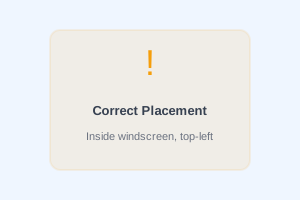
Annual Vignette
Best value for frequent travellers. Valid from 1 December of the preceding year to 31 January of the following year — approximately 14 months of coverage.
Learn more →How to Use the Vignette Correctly
Correct application of the physical vignette sticker is essential. Improper placement can result in the vignette being considered invalid, even if it was legitimately purchased. The following guidelines apply to the traditional adhesive sticker format.
The vignette must not be placed on a removable holder, sunscreen, or any surface other than the windscreen glass itself. Attempting to remove and reuse a vignette will destroy it — the sticker is designed with a security layer that makes it impossible to transfer intact.
For the digital vignette (digitale Vignette), no physical sticker is involved. The vehicle's registration plate is registered in the ASFINAG system, and enforcement cameras automatically verify compliance. Drivers must ensure the correct registration plate number is entered at the time of purchase.
→ View Full Process GuideWhere to Buy the Austrian Vignette
The Austrian vignette is available through multiple channels, both within Austria and internationally. Belgian drivers can purchase the digital vignette before their journey, avoiding the need to stop at the border.
| Purchase Channel | Available Types | Notes |
|---|---|---|
| ASFINAG official website | Digital only | Recommended; purchase up to 1 year in advance |
| ASFINAG app | Digital only | Convenient for mobile purchase |
| Austrian petrol stations | Physical sticker | Available at most motorway service areas |
| Border crossing shops | Physical sticker | Available at major entry points from neighbouring countries |
| Tobacco shops (Trafik) | Physical sticker | Available in Austrian towns and cities |
| ÖAMTC / ARBÖ clubs | Physical sticker | Austrian motoring clubs; not available abroad |
| Some Belgian petrol stations | Physical sticker | Availability varies; check before travel |
| Authorised online resellers | Digital or voucher | Verify legitimacy before purchase |
What Is Included and What Is Not Included
| Included in Vignette | Not Included (Separate Toll Required) |
|---|---|
| All standard motorways (Autobahn) | Brenner motorway (A13) — section-based toll |
| All expressways (Schnellstrasse) | Arlberg tunnel (A14) |
| Unlimited distance on covered network | Karawanken tunnel (A11) |
| Both directions of travel | Tauern motorway (A10) — certain sections |
| Passenger cars up to 3.5t | Pyhrn motorway (A9) — certain sections |
| Motorcycles (own vignette required) | Innkreis motorway (A8) — certain sections |
| Vehicles with trailers (car + trailer = one vignette) | Felbertauern road (private toll road) |
| 24/7 access throughout validity period | Grossglockner High Alpine Road |
| Digital enforcement via cameras | Vehicles over 3.5t (GO-Box system required) |
| No per-kilometre charges on covered roads | Certain Alpine passes and scenic routes |
| Valid immediately upon digital activation | Emergency services and exempt vehicles |
| Transferable between vehicles (digital only, re-purchase needed) | Parking fees at motorway rest areas |
Preparation Checklist Before Driving in Austria
- Confirm your vehicle is under 3.5 tonnes gross weight
- Check which vignette type suits your travel duration
- Purchase the vignette from an official source before or at the border
- For digital vignette: verify your registration plate number is correct
- For physical sticker: affix to inside of windscreen before entering motorway
- Check whether your route includes any special-toll roads
- Carry proof of purchase (digital confirmation email or receipt)
- Ensure your vehicle documents are up to date and accessible
- Check current vignette prices at asfinag.at before purchase
- Note the start date for 10-day or 2-month vignettes carefully
- Verify that the vignette is valid for your vehicle category
- If towing a trailer, confirm a single vignette covers the combination
- Save the ASFINAG customer service number in case of issues
- Review the list of roads requiring additional tolls for your specific route
Fines and Enforcement
Driving on Austrian motorways without a valid vignette is subject to significant penalties. ASFINAG operates an automated enforcement system using cameras at entry points and along motorways that check registration plates against the digital vignette database. Physical stickers are also inspected by police patrols.
Administrative fines for vignette violations can reach up to €240. Repeat offences or deliberate evasion may attract higher penalties. Foreign-registered vehicles are not exempt — Austrian authorities have reciprocal enforcement agreements with most EU member states, including Belgium.
Service Area: Belgium and Neighbouring Countries
This information resource is primarily aimed at drivers based in Belgium who travel to or through Austria. Belgian drivers typically enter Austria via Germany (through Bavaria) or via Switzerland. Both routes require the Austrian vignette once you reach the Austrian border.
Common entry points for Belgian drivers include the Salzburg/Walserberg crossing (from Germany), the Bregenz area (from Switzerland), and the Innsbruck region (from the Brenner Pass, noting the additional toll on the A13).
→ Full Service Area InformationWhat Drivers from Belgium Say
★★★★★
"This guide saved me a lot of confusion at the Austrian border. I bought the digital vignette online before leaving Brussels and had no issues at all."
Martin K. — Brussels, Belgium
★★★★★
"Very clear explanation of the different vignette types. I chose the 10-day option for a ski trip and it was perfect. The checklist was especially helpful."
Sophie L. — Antwerp, Belgium
★★★★★
"I had no idea about the extra tolls on certain mountain routes. This site explained everything clearly and I was able to plan my budget properly."
Thomas V. — Ghent, Belgium